



10 Watermelon Benefits You Didn’t Know About
10 Watermelon Benefits You Didn’t Know About
Watermelon is so much more than a refreshing summer fruit. Year-round, it can support hydration, heart health, skin, and digestion. But here's the interesting part: All parts of the watermelon are edible and provide unique benefits, including the rind and seeds!
Let's dive into 10 science-backed health benefits of eating watermelon. We'll explore how it can support your wellness goals, the nutrients that make it so nourishing, and which part of the fruit is the healthiest. We'll also discuss simple and delicious ways you can consume the rind and seeds.

1. Supports heart health

One study on 18 healthy young men and women looked at the effect of the consumption of daily watermelon juice on heart rate—specifically, heart rate variability (HRV), which is the variation in time between two consecutive heartbeats. A greater variation indicates better health, while a low HRV has been linked to increased heart disease risk and mortality.
The study suggested that the L-arginine and L-citrulline (a non-essential amino acid) in watermelon may boost nitric oxide (NO) levels, which could help support a higher heart rate variability.
Concerned about your ticker? In addition to adding watermelon to your menu, doing regular cardio blood work can help you assess your heart disease risk.
2. Helps keep your blood pressure healthy
Speaking of L-arginine, this amino acid is vital for nitric oxide synthesis. You need NO to regulate vascular tone and lower your blood pressure. Thus, consuming L-arginine-rich watermelon can support healthy blood flow.
Interestingly, your body converts the citrulline in watermelon into L-arginine, which means that your blood pressure health gets an even bigger boost.
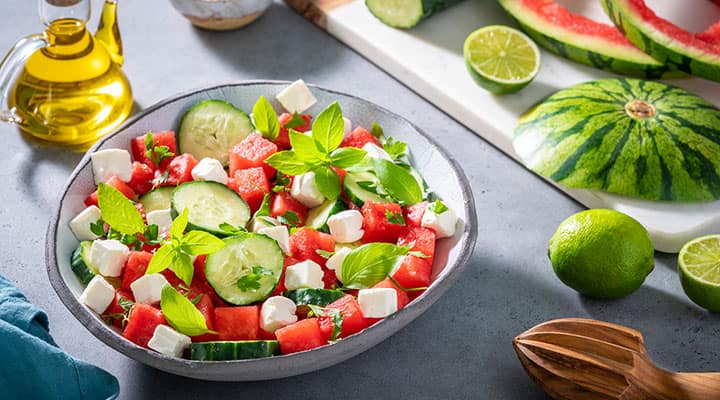
3. Provides a good source of nutrients
Besides amino acids L-arginine and citrulline, watermelon also includes:
Potassium:
This mineral is important for healthy blood pressure.Vitamin C:
Beyond immune support, vitamin C is a superstar for heart health. Studies suggest it may help prevent asthma, protect you against cancer, and support healthy blood sugar levels in people with diabetes.Vitamin A:
Known as retinol, vitamin A supports vision, immune function and skin health. Some research suggests it may also help reduce cancer risk.Vitamin B6:
One of eight B vitamins, pyridoxine is essential for mood support, brain health, and cardiovascular function.Lycopene:
This carotenoid is a plant compound known for its antioxidant properties. Research suggests lycopene supports prostate function, healthy cells and DNA, and already-healthy blood sugar levels.Magnesium:
The mighty mineral is essential for more than 600 biochemical reactions in the body, supporting everything from heart to brain to bone and whole-body health.
How do you know if your body is absorbing all the nutrients it needs from the foods you eat, including watermelon? A nutrient panel blood test helps assess different vitamin, mineral, and antioxidant levels.
4. Supports weight loss

Watermelon is low in calories and helps keep you hydrated, making it an excellent addition to your nutritional plan if you've got weight loss goals.
Pro tip: If you're making healthy swaps like choosing watermelon over highly processed treats, but your weight isn't shifting, your body may be signaling another underlying cause. A weight loss blood test can help identify imbalances in thyroid function or hormone levels that can affect your ability to maintain a healthy weight.
5. Fights cravings for sweets
One reason why watermelon helps your weight loss efforts is that if you've got a hankering for candy and eat fruit instead, you'll be taking in fewer calories, and quashing those cravings for sweets in the process!
While it has a pleasantly sweet taste, watermelon doesn't contain a ton of sugar—about seven grams per 100 grams of fruit. Don't let social media fearmongering about the sugar in fruit scare you away. Natural sugars found in fruits are okay, and watermelon certainly falls into that category. Plus, it's packed with essential nutrients (more on that below).
6. It's a great way to stay hydrated!
There's a reason it's called watermelon: It's made of almost entirely water—92%, to be more precise. So, if you're having a hard time drinking enough water to stay hydrated, you can snack on watermelon to fill in the gaps.
7. Constipated? Have some watermelon!
Because of the high-water content and—although to a lesser degree—the fiber content of watermelon, particularly in the rind, consuming this summer fruit can help keep things moving in the right direction, promoting comfort and regularity.

8. Watermelon: the perfect post-workout snack
Thanks to its nutrient content—especially potassium and magnesium—watermelon is a great snack to replenish electrolytes after a high-intensity workout.
What's more, the amino acids and water content in the pink-fleshed fruit may help alleviate muscle soreness and support blood flow, which then carries more oxygen and nutrients throughout your body and contributes to recovery.
9. Supports immune health
With vitamin A, vitamin C, and lycopene, watermelon helps fight free radicals in the body, which promotes a strong immune system response and fights age-related damage at the cellular level.
10. Good for eye health
Caring for your eye health becomes even more important as you age. Watermelon will be your ally thanks to its lycopene, beta-carotene, beta-cryptoxanthin, lutein, and zeaxanthin content.
What nutrients make watermelon so healthy?
Let's break down the nutritional value of watermelon. In terms of macronutrients—protein, carbohydrates, and fat—watermelon is almost entirely carbohydrates. (Remember, carbs are not "evil," nor will they automatically make you gain weight. Any food consumed in excess can lead to weight gain!)
Beyond its macros, watermelon is loaded with powerful micronutrients, including vitamin C, vitamin A, potassium, and magnesium.
What part of the watermelon is the healthiest?
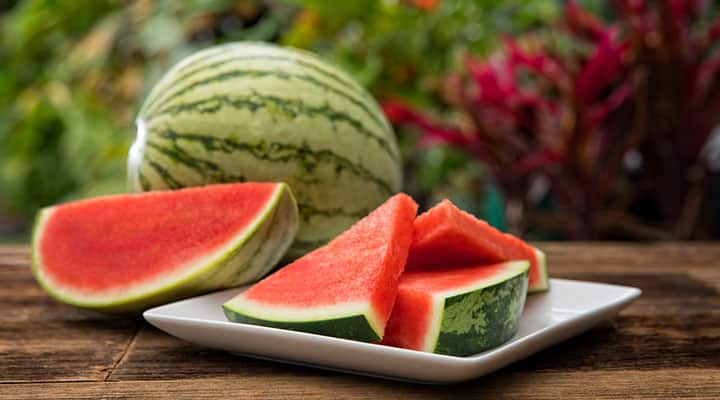
You can eat all parts of the watermelon, and they each provide unique benefits.
Watermelon seeds, for instance, are a good source of protein, healthy fat, fiber, and vitamins B3, C, and E. In addition, they have calcium, phosphorus, magnesium, sodium, potassium, and zinc. You'll also find bioactive compounds like phenolic acids, flavonoids, and carotenoids.
Be mindful that the seeds are much more calorically dense than the flesh (the pink part you're probably used to eating), largely due to the fat content. This isn't a negative—it's just something to be aware of!
Watermelon rind benefits include a generous amount of citrulline, vitamins A and C, and polysaccharides, which have antiproliferative and antioxidant properties. In fact, it has about 1.5 times the amount of citrulline and arginine compared to the flesh. Plus, it has anthocyanin and flavonoids, which carry antioxidant, anti-inflammatory, and anticancer qualities. Look to the rind for more amino acids compared to the flesh (165 mg/100 g vs. 146 mg/100 g).
In addition, the rind is a rich source of dietary fiber, whereas the flesh doesn't contain much.
| Part of Watermelon Fruit | Nutrients | Primary Benefit |
|---|---|---|
| Flesh | Beta-carotene, vitamin C, lycopene, and citrulline | Antioxidant support, hydration, skin health |
| Seeds | Protein, healthy fats, fiber | Heart health, energy support |
| Rind | Fiber, amino acids like arginine, citrulline | Cardiovascular health, digestion support |
Is watermelon good for specific health goals?

Yes! Adding watermelon to your menu is a quick, easy, and delicious snack that can help you achieve your health goals, especially if you want to:
- Replenish electrolytes
- Maintain a healthy weight
- Support heart health
- Promote digestive regularity
- Combat oxidative stress
Is it healthy to eat watermelon every day?
Yes, you can safely eat watermelon every day. If you're not used to eating much fruit, start with a small portion before increasing your serving. As with any food, moderation is key. Speak with a doctor or dietitian to get a tailored amount for your specific nutritional needs.
How can you eat the rind and seeds?

You can safely eat the rind raw, but some people prefer to cook or pickle it. The rind can be made into jam as well. Consider adding it to salads or smoothies (great for disguising the flavor). You can also dehydrate it, but keep in mind that this, of course, removes the water content.
Similarly, you can eat watermelon seeds raw, or you can try roasting them. Munch on them plain or add them as a topping to oatmeal, salads, smoothie bowls, or yogurt.
And if you prefer to stick to the flesh, there are still countless ways to enjoy it. Try spicing it up with Tajin, cinnamon, pepper, salt, or fresh lemon (or lime) juice. Incorporate it into caprese or ceviche. Grill it, pickle it, or turn it into salsa. The possibilities are endless!
Can you eat watermelon with other fruits?
Absolutely! Watermelon packs a big hydration and nutrition punch. Its mildly sweet flavor makes it easy to mix it up with sweeter and citrus fruits, such as bananas, berries, and oranges—hello, fruit salad (you can use the rind as a bowl, and eat it, too)!
Let's Recap:
Watermelon is a low-calorie food with a host of health benefits. Here are the top three highlights about the summer-favorite fruit.
- Eating watermelon can boost satiety thanks to its water and fiber content. Plus, it's a great replacement for less nutritious sweets when you want something delicious that doesn't contain a boatload of sugar.
- Watermelon can support healthy heart rate variability, blood pressure, and blood flow, thanks to its content of L-arginine and citrulline.
- Aptly named, watermelon is mostly water and it's packed with electrolytes, so if you're dehydrated (especially in the summer or after a workout), eating watermelon is an excellent way to stay hydrated.
Resources
- Du X, et al. "Free Amino Acids and Volatile Aroma Compounds in Watermelon Rind, Flesh, and Three Rind-Flesh Juices." Molecules. April 2022. https://pmc.ncbi.nlm.nih.gov/articles/PMC9027972/
- Matthews R, et al. "The Effect of Watermelon Juice Supplementation on Heart Rate Variability and Metabolic Response during an Oral Glucose Challenge: A Randomized, Double-Blind, Placebo-Controlled Crossover Trial." Nutrients. 2023. https://www.mdpi.com/2072-6643/15/4/810
- Naknaen P, et al. "Utilization of watermelon rind waste as a potential source of dietary fiber to improve health promoting properties and reduce glycemic index for cookie making." Food Sci Biotechnol. April 2016. https://pmc.ncbi.nlm.nih.gov/articles/PMC6049186/
- Nissar J, et al. "Nutritional composition and bioactive potential of watermelon seeds: a pathway to sustainable food and health innovation." Sustainable Food Technol. January 2025. https://pubs.rsc.org/en/content/articlehtml/2025/fb/d4fb00335g
- "Watermelon." The University of Sydney: Glycemic Index Research and GI News. https://glycemicindex.com/2021/11/watermelon/
About Our Story Sources
The Life Extension Health News team delivers accurate information about vitamins, nutrition and aging. Our stories rely on multiple, authoritative sources and experts. We keep our content accurate and trustworthy, by submitting it to a medical reviewer.


