Newsletter
Newsletter
Vitamin B12 level good indicator of bone health
 | ||||||||||||||||||||||||||||||
| ||||||||||||||||||||||||||||||
 | ||||||||||||||||||||||||||||||
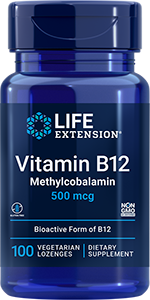
| Life Extension Update Exclusive Vitamin B12 level good indicator of bone health Director of the Dietary Assessment and Epidemiology Research Program at the Jean Mayer USDA, Katherine Tucker, PhD, and colleagues examined data from 2,576 men and women who participated in the Framingham Offspring Osteoporosis Study. The study population, consisting of the children and spouses of the original Framingham study participants, had their bone mineral density measured between 1996 and 2001. Blood samples drawn during this period were analyzed for plasma vitamin B12. It was found that subjects whose vitamin B12 levels were below 250 picograms per milliliter had lower average bone mineral density than those whose B12 levels were higher, putting them at greater risk of developing osteoporosis. Women whose B12 levels were low had notably low bone mineral density in the spine, while men with low B12 showed lower bone density in the hip. The authors note that the loss of stomach acidity that occurs in many older individuals is associated with impaired absorption of protein-bound vitamin B12 from food, and that unbound vitamin B12 in vitamin supplements is better absorbed. It is particularly important for individuals taking acid blockers to obtain adequate B12 from supplements or from foods that have been fortified with the vitamin. Dr Tucker commented, “This is the first large scale study of its kind to show an association between low vitamin B12 and low bone mineral density in men and it confirms other reports of this association in women. It shows that getting enough vitamin B12 from meats, poultry, fish and dairy products may be important for both men and women in maintaining strong bones. Some individuals, particularly older people, have difficulty absorbing vitamin B12 from foods, however, and inclusion of breakfast cereals fortified with vitamin B12 or use of vitamin B12 supplements offers additional protection." | ||||||||||||||||||||||||||||||
| ||||||||||||||||||||||||||||||
| Protocol Osteoporosis Because other trace minerals have been implicated in osteoporosis, the following regimes are recommended for mineral supplementation:
| ||||||||||||||||||||||||||||||
| ||||||||||||||||||||||||||||||
| B vitamins are used in the body individually or in combination with enzymes to help release energy from carbohydrates, fat, and protein. Vitamin B coenzymes are crucial to the metabolic pathways that generate the energy needed by every cell in the body. Because they are co-dependent in their metabolic activities, a deficiency of one B vitamin can affect optimal functioning of organ systems throughout the body. Vitamin B12, or cobalamin, works synergistically with the B vitamin folate, to regenerate (methylate) the amino acid methionine, which helps to maintain healthy physiologic amounts of homocysteine. In addition, vitamin B12:
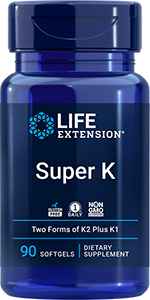
Arterial calcification is characterized as a buildup of calcium in the arterial walls. It is a process that can begin as early as the second decade of life and continue throughout adulthood. Although calcium is an essential nutrient in maintaining human bone integrity, the trick is to keep it out of the arteries. Studies have revealed that adequate levels of vitamin K may help in keeping calcium in bones and out of arterial walls. Life Extension’s Super K provides 9 mg of K1 (phylloquinone) along with 1 mg of K2 (menaquinone) in each oil-based softgel. Adding K2 to this product guarantees users the most consistent potency. | ||||||||||||||||||||||||||||||
| ||||||||||||||||||||||||||||||
| Life Extension Magazine February 2005 issue As We See It: A revolutionary concept slowly gains recognition by William Faloon As the New Year begins, we have reason to be optimistic about the prospect of living much longer than what is predicted by the mortality tables. We at Life Extension, however, are very much aware that time is not on our side. If our older members are to benefit from spectacular advances that may be only a few years away, the pace of scientific research must be accelerated. Every time you purchase a product designed to counteract age-related disease, you directly support our pioneering research. In 2004, the results of our work were published in several prestigious scientific journals, including the Proceedings of the National Academy of Sciences USA. Equally important to our research programs is that the proceeds from our supplement sales help us to educate greater numbers of people about the need to prioritize research that would lead to cures for today’s killer diseases, while at the same time discovering validated methods to eradicate biological aging. | ||||||||||||||||||||||||||||||
| ||||||||||||||||||||||||||||||
| If you have questions or comments concerning this issue or past issues of Life Extension Update, send them to ddye@lifeextension.com or call 954 766 8433 extension 7716. For longer life, Dayna Dye Sign up for Life Extension Update at https://mycart.lifeextension.com/subscribe.asp Help spread the good news about living longer and healthier. Forward this email to a friend! View previous issues of Life Extension Update in the Newsletter Archive. | ||||||||||||||||||||||||||||||