Newsletter
Newsletter
Glucosamine could have potential in fight against MS
 | ||||||||||||||||||||||||||||||
| ||||||||||||||||||||||||||||||
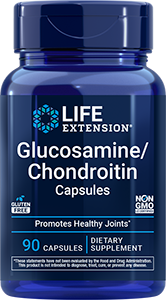
| Life Extension Update Exclusive Glucosamine could have potential in fight against MS A report published in the December 1 2005 issue of The Journal of Immunology revealed that glucosamine, a natural product shown to be of benefit against arthritis, may also be helpful for people with multiple sclerosis (MS), a degenerative disease of the nervous system for which there is currently no cure. Multiple sclerosis is considered to be one of a number of autoimmune diseases, in which the immune system attacks the body. In MS, this results in inflammation and scarring of the myelin sheath surrounding the nerves, leading to central nervous system dysfunction and the characteristic symptoms of the disease. Researchers at Jefferson Medical College of Thomas Jefferson University led by Department of Neurology chair A. M. Rostami, MD, PhD utilized a mouse model of multiple sclerosis called experimental autoimmune encephalomyelitis for the current research. The animals were given oral, abdominally injected, and intravenous glucosamine in doses comparable to those used for osteoarthritis treatment. Some animals received glucosamine before developing MS symptoms, while others received the compound at the onset of their symptoms. Control groups of mice received no treatment. The researchers found that glucosamine administered in any manner delayed the onset and progression of symptoms in the animals who received it. When the spinal cords of the mice were examined, those who received glucosamine were found to have less inflammation and less destruction of the myelin sheath compared to untreated animals. The report concluded, “Because glucosamine functions not simply as an immunosuppressant, but as a mild immunomodulator, administration of glucosamine provides a novel immunoregulatory approach for autoimmune disorders. Dr Rostami explained, “We’ve shown the glucosamine modulates the immune response by producing more TH2 responses, suppressing brain inflammation. At the same time, it suppresses TH1 response.” He added, “It would be fantastic if glucosamine works in humans because we have a product that has a long track record for safety, and most importantly, can be given orally.” The theories concerning the cause(s) of MS are not clearly known; however, scientific research seems to show that the causal factors of immunological, environmental, genetic, and viral, in various combinations, are the most likely reason for MS. In preliminary studies, researchers found that rats bred with an MS-like illness showed few or no signs of disease symptoms after being injected with curcumin, an extract of the spice turmeric while rats without treatment developed severe paralysis. Dr. Chandramohan Natarajan of Vanderbilt University, a researcher in the study, presented the findings at the annual Experimental Biology 2002 Conference. In their 30-day study, Natarajan and coresearcher Dr. John Bright gave injections of 50 and 100 microgram doses of curcumin three times a week to a group of mice bred to develop experimental autoimmune encephalomyelitis (EAE), an autoimmune condition used by researchers as a model for multiple sclerosis because it also results in the slow erosion of myelin. They then watched the rats for signs of MS-like neurological impairment. Rats that had not received curcumin developed EAE by day 15 to such an extent that they displayed complete paralysis of both hind limbs, according to Natarajan. In contrast, rats given the 50 microgram dose of curcumin showed only minor symptoms, such as a temporarily stiff tail. Rats given the 100 microgram dose appeared completely unimpaired throughout the 30 days of the study. Featured Products
Special Edition Winter 2005/2006 issue now online Blueberries—the world’s healthiest food, by William Faloon New Life Extension Mix with Standardized Blueberry Extract Discount prices for pharmaceutical quality products Life span-increasing effects of superoxide dismutase (SOD), by John Colman The disease preventive power of fish and olives Beta-sitosterol and the aging prostate gland, by Stephen B. Strum, MD, FACP, and William Faloon | ||||||||||||||||||||||||||||||
| If you have questions or comments concerning this issue or past issues of Life Extension Update, send them to ddye@lifeextension.com or call 1-800-678-8989. For longer life,  Dayna Dye Sign up for Life Extension Update at subscribe Help spread the good news about living longer and healthier. Forward this email to a friend! View previous issues of Life Extension Update in the Newsletter Archive. | ||||||||||||||||||||||||||||||