


Newsletter
Newsletter
Healthy hormone levels lower cholesterol
 | ||||||||||||||||||||||||||||||
| ||||||||||||||||||||||||||||||
 | ||||||||||||||||||||||||||||||
| Life Extension Update Exclusive Healthy hormone levels lower cholesterol Twenty-seven men and 46 women between the ages of 25 and 81 with elevated cholesterol levels were included in the current study. A lipid profile was obtained and the hormones pregnenolone, DHEA, progesterone, total estrogen and total testosterone were measured upon the participants’ initial visits and at several points during treatment. Subjects were treated with bioidentical pregnenolone and DHEA as oral supplements, and topical triestrogen, progesterone and testosterone gels. Hormone dosage was determined by hormone levels ascertained during the trial. All of the participants were found to have lower total cholesterol levels after youthful hormone levels were restored, with total cholesterol dropping below 200 milligrams per deciliter in 61.6 percent of the group. Mean serum total cholesterol was reduced from 252 milligrams per deciliter before treatment to 192.8 milligrams per deciliter. Mean serum triglycerides were lowered by 35.5 percent. Men experienced a greater reduction in both cholesterol and triglycerides than women. The authors propose that most cases of elevated cholesterol arise as a reaction to the age-related decline in hormone production. Because cholesterol is necessary for the production of hormones, the liver may overproduce cholesterol in an attempt to restore them by elevating their precursor. Lead researcher Sergey A Dr Dzugan, MD told Life Extension, “The findings support the hypothesis that hypercholesterolemia is a compensatory mechanism for life-cycle related down-regulation of steroid hormones and that broadband steroid hormone restoration is associated with a substantial drop in serum TC in many patients. This idea may be a very important in treating migraine, fibromyalgia, fatigue syndrome, depression, bipolar disorder and ADHD patients who often have many hormonal axes imbalanced. It is vital that the hormone levels be tests and the normal amounts restored using bio-identical to human hormones." | ||||||||||||||||||||||||||||||
| ||||||||||||||||||||||||||||||
| Protocol Cholesterol Reduction Before menopause, women usually have total cholesterol levels that are lower than those of men the same age. As women and men get older, their blood cholesterol levels rise until about 60 to 65 years of age. In women, menopause often causes an increase in LDL cholesterol and a decrease in HDL cholesterol level, and after the age of 50, women often have higher total cholesterol levels than men of the same age. Cholesterol is a vital substance that is synthesized by the liver and other bodily tissues. The body uses cholesterol as a building block for essential organic molecules such as steroid hormones, cell membranes, and bile acids. Our bodies produce between 500 to 1000 mg total serum cholesterol each day, and this amount is added to the typical American's diet, which may contain an additional 500 to 1000 mg a day of additional cholesterol-half of which is absorbed into the body. Therefore, the total elimination of all cholesterol from dietary sources may not be enough for some people, and over time they may face elevated cholesterol levels and require additional measures to control or reduce cholesterol (Heart Disease, Preventive Medicine, 1992). The discovery that artichoke leaf extract reduces elevated cholesterol levels opens up exciting perspectives in the prevention and treatment of arteriosclerosis and coronary heart disease. It was as early as the 1930s that scientists first discovered that artichoke extract had a favorable effect on atherosclerotic plaques in the arteries (Tixier, 1939). Later animal studies, in which rats were fed a high-fat diet, also showed that artichoke extract prevented a rise in serum cholesterol levels and the manifestation of atherosclerotic plaque (Samochowiec, 1959 and 1962). | ||||||||||||||||||||||||||||||
| ||||||||||||||||||||||||||||||
A partial list of pregnenolone’s diverse benefits include:
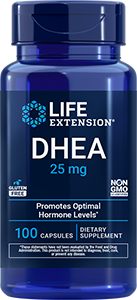
DHEA became credible to the medical establishment when the New York Academy of Sciences published a book entitled DHEA and Aging. This book provided scientific validation for the many life extension effects of DHEA. It has been shown that the hormone DHEA often declines 80-90% by age 70 or later, leading to hormonal imbalances that can affect one’s quality of life. Peak blood levels of DHEA occur at approximately age 25, decreasing progressively thereafter. Thus, scientists have been looking at ways of restoring DHEA to youthful levels, and are now discovering mechanisms by which this hormone protects against age-related decline. | ||||||||||||||||||||||||||||||
| ||||||||||||||||||||||||||||||
| If you have questions or comments concerning this issue or past issues of Life Extension Update, send them to ddye@lifeextension.com or call 954 766 8433 extension 7716. For longer life, Dayna Dye Sign up for Life Extension Update Help spread the good news about living longer and healthier. Forward this email to a friend! View previous issues of Life Extension Update in the Newsletter Archive. | ||||||||||||||||||||||||||||||




Lab
Testing
How Life Extension lab testing works