


Newsletter
Newsletter
Researchers find green tea cancer prevention mechanism
 | ||||||||||||||||||||||||||||||
| ||||||||||||||||||||||||||||||
 | ||||||||||||||||||||||||||||||
| Life Extension Update Exclusive Researchers find green tea cancer prevention mechanism Researchers at the University of Rochester Medical Center have discovered an anticancer mechanism for epigallocatechin gallate (EGCG), a flavonoid in green tea found to be associated with many of its benefits. Although green tea flavonoids appear to be protective against cancer, their mechanism of action had not been completely defined. The report, which was published in the April 5 2005 issue of the journal Biochemistry (https://pubs.acs.org/journal/bichaw), was authored by Christine Palermo of the University of Rochester’s School of Medicine and Dentistry, Claire Westlake and Thomas A. Gasiewicz, PhD, who is the director of Rochester's Environmental Health Science Center and is an authority on dioxin, a well known carcinogen. Dr Gasiewicz’s earlier work had found that EGCG blocks the aryl hydrocarbon (AH) receptor, which is affected by dioxin and other chemicals such as cigarette smoke, and can activate harmful genes. In the current research, his team found that EGCG exerts its cancer protecting ability not by binding to this receptor, but to a protein called HSP90. HSP90 is known as a promiscuous chaperone protein because it binds to a number of different cells and receptors, which helps maintain their stability. Research has shown that cancerous cells have higher levels of HSP90 than healthy cells, and that levels of proteins that encourage cancer cell growth are reduced when HSP90 is blocked. When EGCG binds to HSP90, HSP90 no longer activates the AH receptor and the events leading to the undesirable gene activation are prevented. Dr Gasiewicz noted, “We initially hypothesized that EGCG would work in the same way as other AH antagonists, by binding directly to it. We were completely surprised that this isn't the case." "It's important to find out the source of green tea's protective effects," Dr Gasiewicz stated. "What is exciting here is that a completely new mechanism has been found that very well could be responsible for its protective effects, and that could help us find a compound that is much more potent." | ||||||||||||||||||||||||||||||
| ||||||||||||||||||||||||||||||
| Protocol Mayo Clinic researchers showed that green tea consumption inhibited cancer growth (Paschka et al. 1998). They identified the green tea polyphenol EGCG (epigallocatechin gallate) as the most potent inhibitor of cancer cell proliferation. Japanese researchers pinpointed the types of cancer most responsive to green tea (breast, esophageal, liver, lung, skin, and stomach) by surveying cancer-free individuals who consumed 4-6 cups of green tea a day. The odds ratio of stomach cancer decreased to 0.69 with a high intake of green tea (7 cups or more a day) (Inoue et al. 1998). Another study conducted in Yangzhong (a region in China with a high incidence of chronic gastritis and gastric cancer) showed the amount and duration of green tea consumption governed the rate of stomach cancer. Frequent long-term green tea drinkers had approximately 50% less risk of developing gastric cancer compared to individuals consuming little or no tea (Setiawan et al. 2001). Green tea reduces the damaging effects of nitrites in the acidic environment of the stomach with greater efficiency than vitamin C. The growth of non-Hodgkin's lymphoma cells, transplanted in mice, was reduced by 50% when green tea was a part of the animal's diet. Cyclophosphamide, a chemotherapeutic drug, administered at the maximum tolerable dose, was unable to replicate similar benefits (Bertolini et al. 2000). Part of green tea's anticancer profile includes an antimutagenic factor that helps DNA replicate accurately (Uhlenbruck et al. 1998). Cigarette smokers who drink green tea have a 45% lower risk of lung cancer compared to non-tea drinkers. Even though Japan has one of the highest numbers of smokers in the world, they have one of the lowest rates of lung cancer of any developed nation, a protection thought to be delivered by green tea. | ||||||||||||||||||||||||||||||
| ||||||||||||||||||||||||||||||
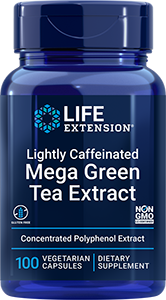
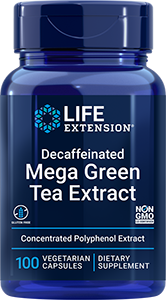
| Featured Products
| ||||||||||||||||||||||||||||||
| ||||||||||||||||||||||||||||||
| Register now for the National Conference on Prostate Cancer 2005! The conference will be held June 16-19, 2005 at the Omni Shoreham Hotel, Washington, D.C. This year’s theme is “Exploring New Pathways – Sharing the Journey,” and will focus many of the lecture discussions on the “new pathways” for diagnosing, staging and treating prostate cancer. These are planned to include:
Dr. Charles "Snuffy" Myers will be the Moderator for this exciting and informative program. He will be joined by over 20 speakers who are all experts in the various areas of prostate cancer. Who Should Attend?
Call PCRI at 310-743-2117 for details, visit http://prostate-cancer.org | ||||||||||||||||||||||||||||||
 | ||||||||||||||||||||||||||||||
| Questions? Comments? Send them to ddye@lifeextension.com or call 1-800-678-8989. For longer life, Dayna Dye Sign up for Life Extension Update at Subscribe Help spread the good news about living longer and healthier. Forward this email to a friend! View previous issues of Life Extension Update in the Newsletter Archive. | ||||||||||||||||||||||||||||||



Lab
Testing
How Life Extension lab testing works