Healthy lifestyle behaviors in old age add half a decade to life span Tuesday, September 11, 2012. Engaging in health-promoting lifestyle behaviors during one's golden years can result in a longer life, even among the very old, according to research described online on August 30 in the British Medical Journal. "Studies have shown that lifestyle factors such as smoking, alcohol consumption, and body weight (both underweight and overweight), can predict mortality in elderly people," Debora Rizzuto, PhD and her colleagues at Sweden's Karolinska Institutet in Stockholm write. "However, it is uncertain whether these associations are applicable to the oldest old. Indeed, studies have indicated that the relation between certain lifestyle factors and mortality may differ among those aged 75 or older compared with younger adults." The study included 1,810 men and women who were at least 75 years old participating in the Kungsholmen Project, a longitudinal study on dementia and aging. Interviews conducted upon enrollment obtained information concerning the participants' smoking status, alcohol intake, leisure activities, social networks, chronic diseases and other factors. The group was followed for 18 years, during which 91.8 percent died. Half of the participants survived longer than 90 years of age. Not surprisingly, women and nonsmokers lived longer than men and current smokers. Subjects who regularly engaged in physical activity lived a median of two years longer than those who did not, and those who consumed alcohol lived a median of 1.3 years more than those who were never drinkers. Men and women who had a low risk profile, characterized by healthy lifestyle behaviors, participation in one or more leisure activities and having a rich social network (defined as living with a spouse, being in regular contact with children, and having daily to weekly contact with relatives and friends) or a moderate social network (defined as having two of the three elements of a rich social network) lived a median of 5.4 years longer than those who had a high risk profile that included none of these factors. When the subjects were analyzed according to gender, men with a low risk profile lived a median of six years longer and women five years longer in comparison with those who had a high risk profile. And in an analysis of those 85 years of age or more, a low risk profile still conferred a median age of death that was 4.7 years older than that of subjects with a high risk profile. "To the best of our knowledge this is the first study that directly provides information about differences in longevity according to several modifiable factors," the authors write. "Our results suggest that encouraging favorable lifestyle behaviors even at advanced ages may enhance life expectancy, probably by reducing morbidity." |
 |
| An article published online on July 23, 2012 in the Archives of Neurology reveals an association between longer telomeres and a decreased risk of mortality or dementia over a median period of 9.3 years. Telomeres are protective DNA sequences located at the ends of chromosomes that shorten with each division of the cell. Although telomeres are a known marker of cellular aging, their association with whole organism aging and various diseases is currently being explored. Columbia University researchers evaluated leukocyte (white blood cell) telomere length in 1,983 participants in the Washington Heights-Inwood Community Aging Project, which studied aging and dementia in New York City residents. The average age at blood drawing was 78.3 years. Over the follow-up period, 863 men and women died and 190 developed dementia. Men's telomeres were on average shorter than women's, and younger subjects had longer telomeres in comparison with older subjects. Telomere length was shorter among those who had pre-existing dementia or who developed dementia over follow-up. Short telomeres also increased the risk of dying during over the follow-up period. "Short telomere length may cause more rapid aging, or alternatively states of illness, including incipient dementia, might cause short telomere length, or some independent factor might cause shortened telomeres and aging and dementia," write Lawrence S. Honig and his associates. "Our studies do not imply the direction of causation, and telomeres may simply be a marker of aging, rather than a determinant of the aging process." "If telomere length was a determinant rather than a marker of aging, one could speculate that therapies directed toward modifying telomere length shortening, by modestly increasing telomerase activity, might be helpful in decreasing the incidence of age-related dementia," they conclude. |
|
| 
| 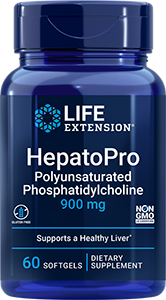 | HepatoPro (Polyunsaturated Phosphatidylcholine)
900 mg, 60 softgels
Item #01393 |  | | | Endogenous phospholipid is an integral part of all cell membranes and essential for their structural and functional integrity. The chemical structure of an extract from soybeans called PPC (polyenylphosphatidylcholine) corresponds to that of endogenous phospholipid and integrates in the cell membrane, becoming the cell's constitutive element. PPC possesses functional superiority because of its content of unsaturated fatty acids. PPC has antioxidant, cytoprotective, and fluid-regulating effects and has been shown to enhance cell membrane function throughout the body. HepatoPro contains PPC (polyenylphosphatidylcholine). Each 900-mg PPC softgel is well-absorbed when taken orally and has no known contraindications, side effects, or drug interactions. | | 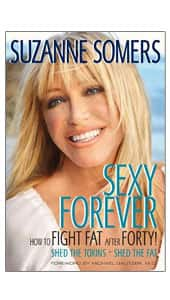 | Sexy Forever: How to Fight Fat after Forty, by Suzanne Somers
Item #33830
| | | | If you are like most, you have tried to find an easy, enjoyable, permanent weight loss solution. One that doesn't make you give up too many of your favorite foods, have you working out like a maniac, and won't fail you in the long run. But long-term success is awfully hard if you don't address the hidden culprit behind the excess fat we carry: the toxic burden our bodies have accumulated. Whether you have just a few pounds to lose or are battling more, this new plan from health pioneer Suzanne Somers will give you the knowledge you need to easily combat these toxins and become slim, vibrant, healthy, and sexy … forever. | | |