Newsletter
Newsletter
Meta analysis confirms fiber supplementation helps reduce blood pressure
 | ||||||||||||||||||||||||||||||
| ||||||||||||||||||||||||||||||
 | ||||||||||||||||||||||||||||||
| Life Extension Update Exclusive Meta-analysis confirms fiber supplementation helps reduce blood pressure Researchers from the Netherlands analyzed articles concerning 24 randomized controlled trials conducted between 1966 and 2003 that provided data on fiber type and dose and blood pressure changes. There were 1,404 combined subjects with an average blood pressure reading of 133/82 mm Hg at the beginning of the trials. Soluble fiber was provided in 11 trials, insoluble fiber in 7 and a mixture in 6. The average dose of fiber given in the trials was 11.5 grams per day. Systolic blood pressure was determined to be lowered by 1.13 mm Hg and diastolic by 1.26 mm Hg when all of the trials were averaged. Individuals over the age of 40 experienced a greater reduction in systolic blood pressure than did younger subjects, and populations with hypertension experienced significantly greater reductions in both systolic and diastolic blood pressure than those with normal blood pressure. Soluble fiber had a greater effect at lower blood pressure than did insoluble fiber. In their commentary, the authors discuss the ability of fiber to reduce the glycemic index of foods, which can lower insulin response and help lower blood pressure due to the role insulin may play in blood pressure regulation. Fiber has also been demonstrated to enhance insulin sensitivity and improve vascular endothelial response. Interestingly, the authors state that there is evidence that fiber, particularly soluble fiber, improves mineral absorption in the gastrointestinal system, which contradicts the belief previously held by many that fiber interferes with mineral absorption. Although the effects found in this meta-analysis were small, increasing fiber intake in Western countries in which fiber is deficient may help to prevent the development of hypertension, particularly if combined with a healthy diet and exercise. | ||||||||||||||||||||||||||||||
| ||||||||||||||||||||||||||||||
| What's Hot Folate from diet and supplements lowers hypertension risk Dr Forman and colleagues examined data obtained from the Nurses Health Study I, which enrolled women aged 43 to 70, and the Nurses’ Health Study II, which included women between the ages of 27 to 44. Data from 53,739 participants in the Nurses’ Health Study I and 88,999 women in the Nurses’ Health Study II were selected for the current analysis. During the eight year follow-up period, 12,347 cases of hypertension were diagnosed in the Nurses’ Health Study I, and 7,373 in the Nurses’ Health Study II. Older women (in the Nurses’ Health Study I) whose intake of folate from diet and supplements was 1000 micrograms per day or greater experienced an 18 percent lower risk of developing hypertension than those whose intake was less than 200 micrograms. For the younger women in the Nurses’ Health Study II whose folate intake was 1000 micrograms or more, the risk of hypertension was 46 percent lower than that of women with the lowest intake. When folate from diet alone was analyzed, no significant effect was found, possibly because few participants consumed high quantities of foods containing the vitamin, however the authors offer a secondary explanation that supplemental folic acid has twice the bioavailability of that which naturally occurs in food. | ||||||||||||||||||||||||||||||
| ||||||||||||||||||||||||||||||
| Protocol Hypertension and hypertensive vascular disease Hypertension can be controlled through use of natural supplements. Mainstream practitioners believe that only prescription medications are proven to reduce hypertension. Yet, supplements are scientifically proven to help normalize blood pressure (Espeland et al. 1999). There are nutrients that may reduce or eliminate the need for antihypertensive medications. However, nutrients may not work immediately to lower blood pressure the way drugs do, so it is important to continue nutritional-based blood pressure-lowering therapy over a period of 4 to 12 weeks. Physician cooperation is always crucial if you are to reduce your intake of antihypertensive drugs safely. Arginine is frequently used as a treatment for hypertension. A defect in nitric oxide production is a possible mechanism of hypertensive vascular disease (Campese et al. 1997). Some cardiologists recommend L-arginine over nitroglycerine, since the two substances appear to replicate a similar vascular function, that is, the ability to relax smooth muscles and dilate blood vessels. Lifestyle modifications to diet, salt intake, weight loss, smoking, and exercise can reduce blood pressure in a significant number of people. Studies affirm the need for a population-wide effort for health promotion through lifestyle modification (Miura et al. 2001; Vasan, 2001; Vasan et al. 2001, 2002). | ||||||||||||||||||||||||||||||
| ||||||||||||||||||||||||||||||
|
PGX Soluble Fiber Blend capsules Overweight people are trying to curb their intake of high-glycemic carbohydrates, yet despite ever-greater consumption of “low carb” foods, the obesity epidemic worsens every year. One problem is that many foods induce excess insulin production, thus making it virtually impossible to avoid meals that promote fat gain. High-glycemic index foods cause weight gain by inducing the overproduction of insulin. A new fiber blend called PGX™ limits the absorption of dietary sugars into the bloodstream, thereby reducing the release of insulin by as much as 40%! The virtue of this highly viscous soluble fiber blend is that only small amounts are required to inhibit acute spikes in blood glucose and insulin. This new fiber also has been shown to lower total cholesterol and low-density lipoprotein (LDL).
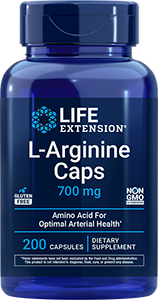
L-arginine is an essential amino acid. It is required for the body to synthesize nitric oxide, which enables the arterial system to retain its youthful elasticity. Nitric oxide also helps to produce endothelial relaxation factor, which is needed by the arterial system to expand and contract with each heartbeat. | ||||||||||||||||||||||||||||||
| ||||||||||||||||||||||||||||||
| Questions? Comments? Send them to ddye@lifeextension.com or call 954 766 8433 extension 7716. For longer life, Dayna Dye Sign up for Life Extension Update at Subscribe Help spread the good news about living longer and healthier. Forward this email to a friend! View previous issues of Life Extension Update in the Newsletter Archive. | ||||||||||||||||||||||||||||||