


Newsletter
Newsletter
Curcumin helps prevent breast cancer metastasis in mice
 | ||||||||||||||||||||||||
| ||||||||||||||||||||||||
 | ||||||||||||||||||||||||
| Life Extension Update Exclusive Curcumin helps prevent breast cancer metastasis in mice 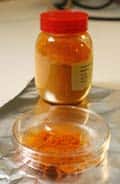 A study published in the October 15 2005 issue of the American Association for Cancer Research journal Clinical Cancer Research http://clincancerres.aacrjournals.org found that c urcumin, which occurs in the spice turmeric, prevents breast cancer from spreading to the lungs of mice given the compound. Researchers at the University of Texas M. D. Anderson Cancer Center injected 60 mice with human metastatic breast cancer cells. When the tumors reached the size of 10 millimeters they were surgically removed. Five days later half the mice were provided with diets enhanced with curcumin, while the remainder received standard diets until the study’s conclusion. Fifteen of the mice in each of these groups were injected with paclitaxel at days 10, 17 and 24 following tumor removal. Although paclitaxel is effective in its ability to treat breast cancer, it also encourages metastasis when used for a long period of time and is therefore not effective to treat the advanced form of the disease. Upon examination of the animals’ lungs five weeks after the tumors were removed, 96 percent of the mice who received neither curcumin nor paclitaxel had visible metastases. While paclitaxel alone elicited a modest reduction in visible metastases, curcumin provided significant reduction, and the combination of curcumin and paclitaxel prevented these macrometastases entirely. Microscopic metastases were found in only 28 percent of the mice receiving the curcumin/drug combination, and these consisted of only a few cells, suggesting that the treatment prevented the growth of tumor cells present in the lungs before the primary tumors were removed. The toxicity of paclitaxel activates an inflammatory protein, (nuclear factor kappa B) that induces metastasis, but curcumin inhibits this response. The finding that the addition of curcumin to paclitaxel resulted in reduced could enable a lower dose of the potentially toxic drug to be administered. Lead researcher and professor of cancer medicine at M. D. Anderson's Department of Experimental Therapeutics, Bharat Aggarwal, PhD, commented, "We are excited about the results of the study and the possible implications for taking the findings into the clinic in the next several years. At this time, advanced breast cancer is a difficult foe to fight with few proven treatments available after surgery, chemotherapy and radiation therapy." | ||||||||||||||||||||||||
| ||||||||||||||||||||||||
| Protocol Curcumin has a number of biological effects in the body. However, one of the most important functions is curcumin's ability to inhibit growth signals emitted by tumor cells that elicit angiogenesis (growth and development of new blood vessels into the tumor). Curcumin inhibits the epidermal growth factor receptor and is up to 90% effective in a dose-dependent manner. It is important to note that while curcumin has been shown to be up to 90% effective in inhibiting the expression of the epidermal growth factor receptor on cancer cell membranes, this does not mean it will be effective in 90% of cancer patients or reduce tumor volume by 90%. However, because two-thirds of all cancers overexpress the epidermal growth factor receptor and such overexpression frequently fuels the metastatic spread of the cancer throughout the body, suppression of this receptor is desirable. Other anticancer mechanisms of curcumin include:
Based on the favorable, multiple mechanisms listed above, higher-dose curcumin would appear to be useful for cancer patients to take. However, as far as curcumin being taken at the same time as chemotherapy drugs, there are contradictions in the scientific literature. Therefore, caution is advised. https://www.lifeextension.com/protocols/cancer/breast-cancer | ||||||||||||||||||||||||
| ||||||||||||||||||||||||
| Featured Products
| ||||||||||||||||||||||||
| ||||||||||||||||||||||||
| If you have questions or comments concerning this issue or past issues of Life Extension Update, send them to ddye@lifeextension.com or call 1-800-678-8989. For longer life,  Dayna Dye Sign up for Life Extension Update at https://mycart.lifeextension.com/subscribe.asp Help spread the good news about living longer and healthier. Forward this email to a friend! View previous issues of Life Extension Update in the Newsletter Archive. | ||||||||||||||||||||||||


