


Newsletter
Newsletter
ALS Risk Reduced By Higher Omega 3 Fatty Acid Intake
| ALS risk reduced by higher omega-3 fatty acid intake | ||||
Tuesday, July 22, 2014. A pooled analysis reported online on July 14, 2014 in JAMA Neurology unveils an association between higher omega-3 fatty acid intake and a reduction in the risk of developing amyotrophic lateral sclerosis (ALS or Lou Gehrig’s disease), a devastating progressive disease of the central nervous system. Kathryn C. Fitzgerald, MSc, of Harvard School of Public Health and her associates evaluated data from 522,968 men and 479,114 women enrolled in the National Institutes of Health–AARP Diet and Health Study, the Cancer Prevention Study II Nutrition Cohort, the Health Professionals Follow-up Study, the Multiethnic Cohort Study, and the Nurses’ Health Study. Dietary questionnaire responses were analyzed for omega 3 and omega 6 fatty acid intake. Over follow-up periods ranging from 9 to 24 years, 995 cases of ALS were diagnosed. While omega 6 intake was not associated with ALS risk, subjects whose intake of omega 3 fatty acids was among the highest one-fifth of participants had a 34% lower risk of developing the disease in comparison with those among the lowest fifth. Increased alpha-linolenic acid and marine omega-3 fatty acid intake were both associated with a lower risk of the disease. Total calories consumed or percentage of energy intake from fat was not associated with risk. “Fitzgerald and colleagues suggest that the fatty acid composition of cell plasma membranes, which could be measured in red cell membranes, might be important in modulating oxidative stress responses, excitotoxicity and inflammation, all factors that have been implicated in ALS and other neurodegenerative conditions,” noted Michael Swash, MD, of the Royal London Hospital in an accompanying editorial. "Further research, possibly including biomarkers of polyunsaturated fatty acid intake, should be pursued to confirm these findings and to determine whether high omega 3 polyunsaturated fatty acid intake could be beneficial in individuals with ALS," Dr Fitzgerald and her associates conclude. |
||||


| What's Hot | ||||
| Fish oil use associated with brain volume preservation | ||||
The study included 193 Alzheimer's disease patients, 397 individuals with mild cognitive impairment (MCI) and 229 cognitively normal individuals who participated in the Alzheimer's Disease Neuroimaging Initiative, a five year study designed to evaluate changes in cognition and brain structure in men and women aged 55 to 90. Subjects underwent neuropsychological testing and magnetic resonance imaging of the brain upon enrollment and at six to twelve month intervals. The analysis included 117 subjects who regularly used fish oil supplements at the initial study visit, among whom a significant percentage reported continued use at subsequent visits. While average hippocampus and cerebral cortex gray matter volume decreased over time in the group as a whole, the use of fish oil was associated with improvements in these areas. Those who used fish oil over follow-up had better scores of cognitive function at any time over the course of the study; however, the effect mainly occurred among those who were not carriers of the apolipoprotein E4 gene, which has been linked with Alzheimer's disease. "This retrospective cohort study is the first to examine the potential association of ongoing fish oil supplement use with conservation of brain volume and cognition across the spectrum of normal aging and neurodegeneration," Lori A. Daiello of Brown University and colleagues announce. "The relationships of fish oil supplement use with preserved cerebral cortex gray matter volume in MCI and hippocampus volume in Alzheimer's disease have not been previously reported." They conclude that their results "highlight the need for future research on the effects of long-term fish oil supplement use on cognitive aging and dementia prevention in middle-aged and older adults." |
||||

| Latest Products | |||||
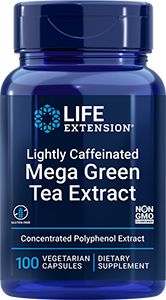 |
Mega Green Tea Extract 100 vegetarian capsules Item #00953
|
||||
Green tea has been shown to provide many benefits including:
|
|||||
|
Mega Green Tea Extract 100 vegetarian capsules Item #00953
|
||||
Green tea has been shown to provide many benefits including:
|
|||||
| Related Articles | |||
| Life Extension Update | What's Hot | ||
 |
 |
||
| Life Extension Magazine® | Health Topics | ||
 |
 |
||


