



The Pulse
Keep the beat with our health newsletter
The Pulse
Keep the beat with our health newsletter
Study Suggests Protective Effect for Green Tea Against Non-Motor Symptoms in People with Parkinson's Disease
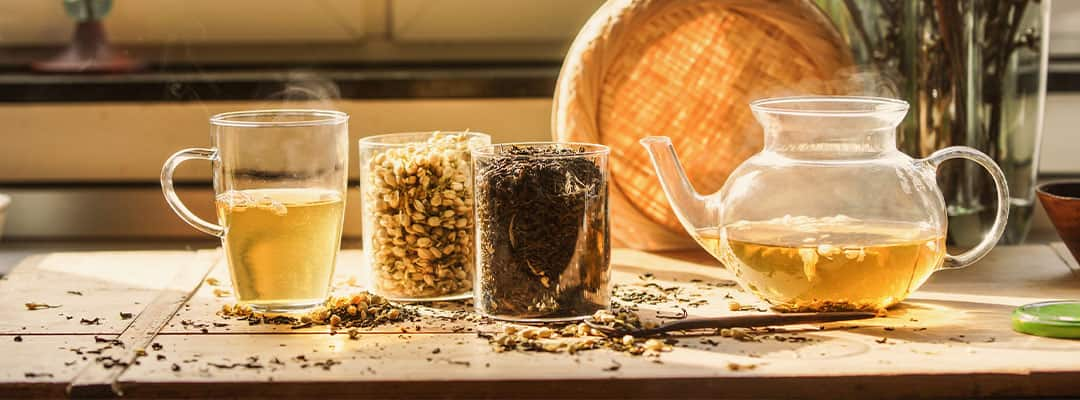
How much green tea participants drank, and whether they drank it daily, mattered in a study of older adults with Parkinson's disease. Those drinking a high amount daily were less likely to have certain non-motor symptoms than those drinking less. Additionally, daily drinkers needed fewer medications compared with non-daily drinkers.
"Non-motor symptoms are prominent features of advanced Parkinson's disease that contribute to disability severity and quality of life impairment," authors Harutoshi Sakakima of Kagoshima University in Japan and colleagues noted.
Among green tea drinkers who consumed more than a liter of green tea per day, a significantly lower proportion had moderate and severe sleep disturbances in comparison with green tea drinkers who consumed lesser amounts. Another non-motor symptom, constipation, was reduced in association with daily green tea intake. Parkinson's disease patients who consumed green tea daily needed significantly fewer medications than individuals who consumed the beverage less often.
"Lifestyle habits, including tea and coffee consumption, have been associated with a reduced risk of developing Parkinson's disease in some epidemiological studies," Sakakima and colleagues wrote. "Experimental studies have shown that polyphenols in tea (those from green tea in particular), including catechin and its derivatives, may exert potent neuroprotective activities that can ameliorate neurodegenerative disease symptoms such as those in Parkinson's disease."
The study included 105 older men and women residing in Japan who were diagnosed with Parkinson's disease. Seventy-eight individuals reported drinking green tea daily, 22 people were non-daily green tea drinkers, and five individuals did not consume green tea. Daily green tea drinkers were analyzed according to whether they consumed less than 0.5 liters, 0.5 to one liter or greater than one liter per day. The findings were reported September 30, 2026, in Nutrition and Health.1
Products


Apply What You’ve Learned: Parkinson’s disease
- Parkinson's disease is a disorder of the central nervous system characterized by damage to and death of the dopamine-producing cells in the substantia nigra region of the brain. Dopamine is a neurotransmitter that allows messages to be delivered to brain areas that coordinate movement, which explains motor symptoms that occur in Parkinson's disease. Loss of brain cells that produce dopamine can also result in non-motor symptoms such as constipation.
- Exposure to pesticides, organic solvents, lead and air pollution, traumatic brain injury, cardiovascular disease, certain infections and other factors may increase the risk of developing Parkinson's disease.2
- Among lifestyle factors, evidence suggests that exercise may help lower the risk of Parkinson disease, beneficially modify its course and improve symptoms.3 A healthy diet may be protective as well. A study that included over 47,000 women found a significantly lower risk of Parkinson's disease among women who had greater adherence to a Mediterranean diet pattern.4
- Nutrients that may be helpful for people with Parkinson's disease include coenzyme Q10 (CoQ10), resveratrol, omega-3 fatty acids and more.5-7
References
- Sakakima H, Uchi T, Nakanishi K, et al. A comparative analysis of effects of daily green tea consumption on non-motor symptoms among community-dwelling older patients with Parkinson's disease. Nutr Health. 2026 Sep 30:2601060261493252.
- Grotewold N, Albin RL. Update: Protective and risk factors for Parkinson disease. Parkinsonism Relat Disord. 2024 Aug:125:107026.
- Langeskov-Christensen M, Franzén E, Hvid LG. Exercise as medicine in Parkinson's disease. J Neurol Neurosurg Psychiatry. 2024 Oct 16;95(11):1077-1088.
- Yin W, Löf M, Pedersen NL, et al. Mediterranean dietary pattern at middle age and risk of Parkinson's disease: a Swedish Cohort Study. Mov Disord. 2021 Jan;36(1):255-260.
- Sharma R, Bhate L, Agrawal Y, et al. Advanced nutraceutical approaches to Parkinson's disease: bridging nutrition and neuroprotection. Nutr Neurosci. 2025 Sep;28(9):1134-1150.
- Saadh MJ, Saeed TN, Al-Hussainy AF, et al. Mechanistic insights into ubiquinone Q10 in Parkinson's disease: mitochondrial protection, ferroptosis inhibition, and antioxidant recycling. Arch Physiol Biochem. 2026 Feb;132(1):134-150.
- Li P, Song C. Potential treatment of Parkinson's disease with omega-3 polyunsaturated fatty acids. Nutr Neurosci. 2022 Jan;25(1):180-191.

Related Life Extension Magazine® Articles

Green Tea’s Effects on Brain Signaling
Catechins in green tea boost the creation of new brain cells and enhance brain signaling.

Rock Steady Boxing: Fighting Back Against Parkinson’s
After her husband’s Parkinson’s diagnosis 14 years ago, Jenny Enslein became an active leader in the Rock Steady Boxing program. Research shows it substantially improves walking, balance, and fall risk.
Life Extension Magazine® Issue Now Online

Neck pain is often caused by a variety of correctable lifestyle factors. A new clinical study showed that two plant compounds reduced neck pain and stiffness by targeting underlying inflammatory mechanisms.


